TYPE
Archival NASA imagery · offline 3D
FIDELITY
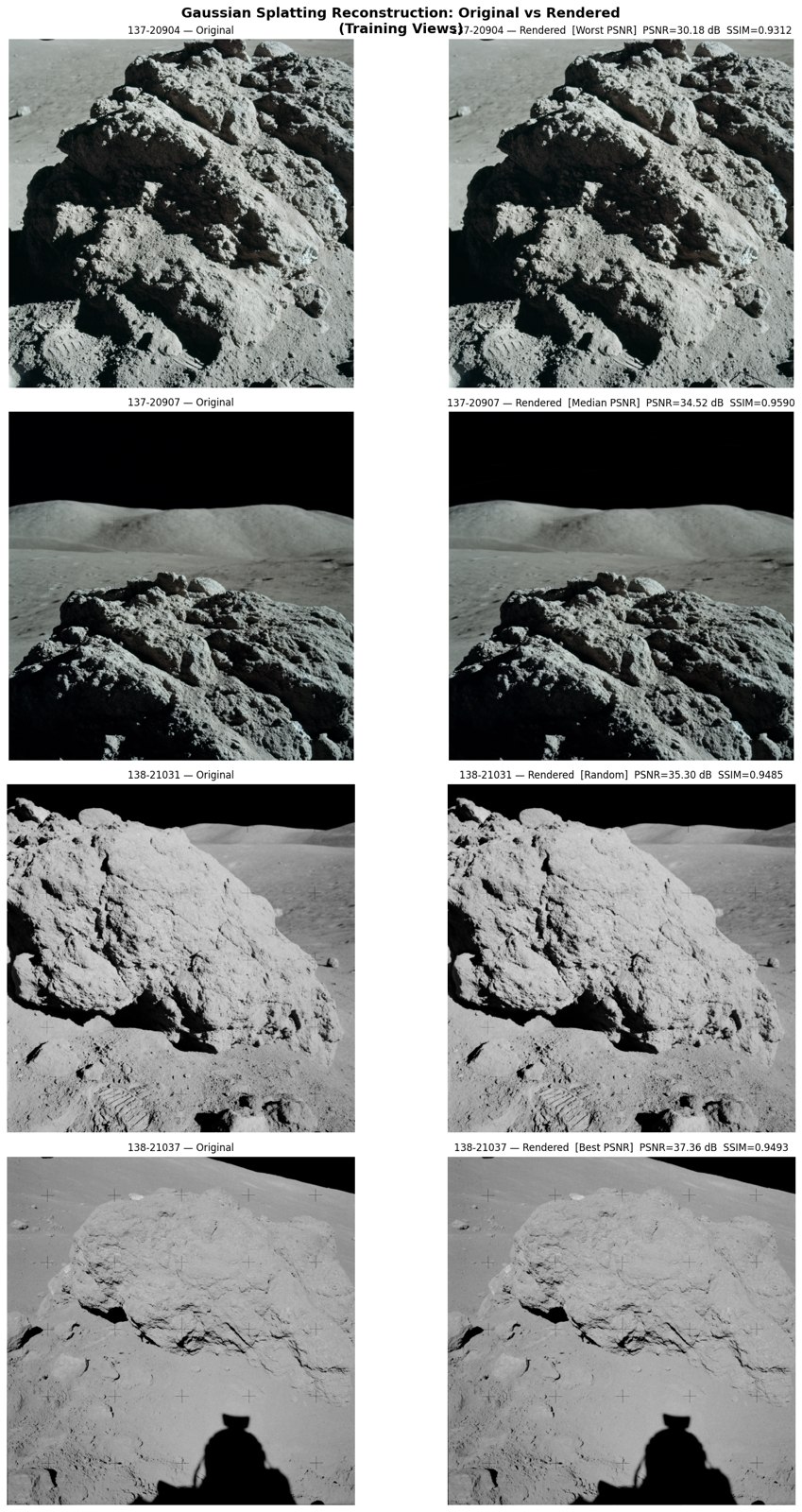
33.93 dB PSNR on training views
CROSS-CHECK
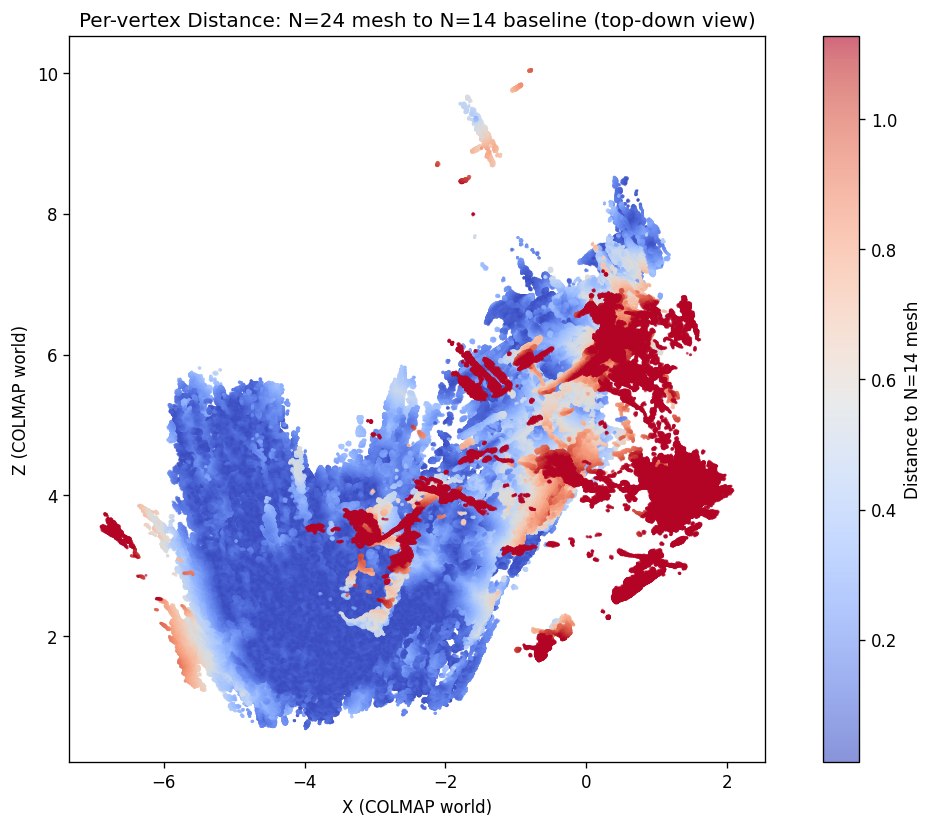
F-score 0.934 at a 5% diagonal threshold
Overview
- Fifteen Hasselblad photographs from December 1972 rebuilt into 3D two independent ways: classical photogrammetry through COLMAP with a custom dense stereo stage, and 3D Gaussian Splatting through splatfacto.
- The two reconstructions cross validate at an F-score of 0.934, and the project ends on a rigorous negative result about feeding synthetic views back into photogrammetry.
Design & Build
- Classical pipeline: COLMAP registered 14 of 15 frames at 0.56 px reprojection error; a from scratch PyTorch CUDA plane sweep multi view stereo, written because the packaged COLMAP lacked dense support, fed a 1.06 million vertex Poisson mesh with occlusion aware texturing.
- Splatting: About 993,000 Gaussians trained for 30,000 iterations reach 33.93 dB mean PSNR and 0.943 SSIM on the training views.
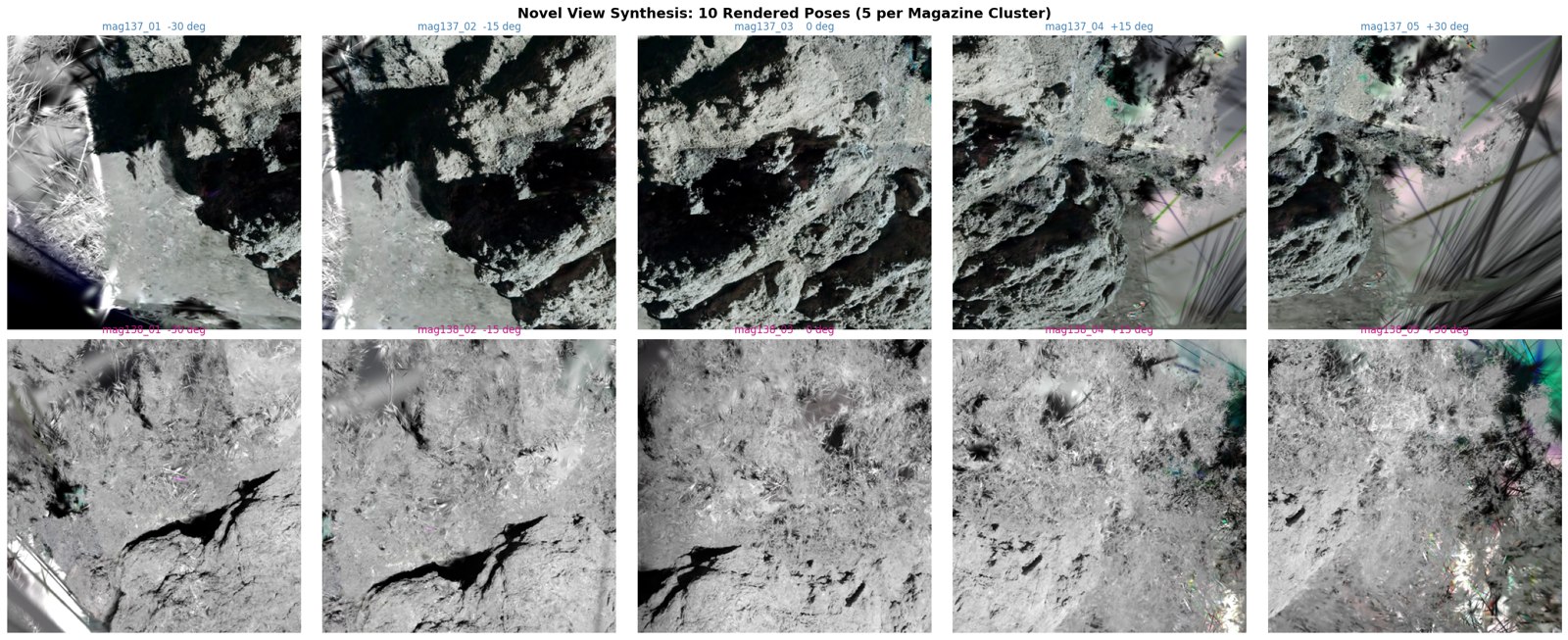
- The experiment: Ten novel views rendered from the splat, after debugging the OpenCV to OpenGL camera convention flip, were fed back into COLMAP: zero registered despite thousands of SIFT matches. Splat renders fool the eye, not the geometry checks.
Challenges
- Archival film with no camera metadata and one unregistrable frame.
- Dense reconstruction without CUDA support in the packaged tools, solved by writing the stereo stage from scratch.
Result
- Two independent reconstructions agreeing at F-score 0.934; 33.93 dB training view PSNR; and a documented negative result on splat based augmentation, which is what rigor looks like.
Skills & Tools
COLMAPPyTorchCUDAMulti-View Stereo3D Gaussian SplattingOpen3DPoisson Meshing